


6 February 2026
Have you ever thought about why learning in the UK is more relevant to the business environment and more practical and interesting to Indian students than traditional methods of learning? This is because of how the UK style of teaching is directed towards preparing Indian students for a global career rather than just for passing exams.
The UK educational system is student centred. They focus on practical action, applying knowledge, and independent thought as the basis of learning; rather than just reading and memorising material such as textbooks. Teaching in the UK has evolved to meet the needs of the workplace and global marketplace from 2024 to 2025.
A significant part of education in the UK includes independent study. An Indian student will learn to read deeply into subjects, conduct extensive research on their topic of study, and form their own opinions on various issues. In the UK, teachers become mentors or facilitators who help guide students but do not provide all of the answers to their questions. This way, students gain confidence in their ability to self-educate and also have a greater preparation for the workforce where the ability to make well-thought-out decisions is an important part of being successful in a business.
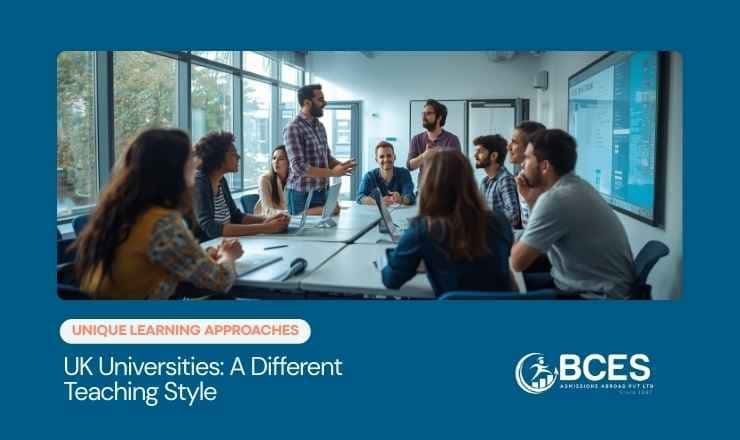
Classroom learning within the UK is predominantly characterized by interactivity and participation. Students interact with each other while discussing, querying and debating ideas throughout the classroom. While for Indian students this can be a new experience, this is ultimately beneficial because it enables their communication skills to develop and prepares them for a global workplace over time.
Teaching deliveries in the UK consists of four approaches; lecture-based instruction delivers the fundamentals of the subject, seminar-based methods allow students to discuss and analyse these principles, tutorial-based instruction provides personalised opportunities to learn and lastly practical activities enable students to consolidate their theoretical knowledge in real-life situations. The majority of UK universities now utilise virtual learning in conjunction with classroom activity to enhance the experience for international students in particular.
A key strength of the UK education system is its focus on critical thinking. Students are encouraged to critically evaluate information, to challenge the established orthodoxy and validate their assertions using evidence. Assignments will test understanding instead of just memory; typical assignments include essays, case studies, presentations and group projects to demonstrate progress. There have also been changes made to the assessments to ensure that assessments are fair and transparent for all students regardless of their background.
In the UK, practical experience is very important for higher education students. Throughout their courses, students will typically study real case studies, projects and/or problems from businesses or industries that reflect the same types of conditions they will encounter in their future careers upon completion of their studies. Guest speakers visiting from industry will provide both relevant and realistic evidence of how the theory learned in class is related to their future career.
One of the major reasons why many Indian students enrolled in UK universities feel that they are ready to enter the workforce when they graduate is because of this hands-on approach to practical learning and experience.
Another reason why many Indian students are successful when transitioning from a different education system into a new one is that UK universities provide significant levels of support to students. This includes academic support, personal tutors, writing support, and skill development workshops, as well as many other types of academic support. Recently, universities have placed increased emphasis on providing support around student wellbeing in addition to academic support, which has resulted in students feeling that they are primarily supported both academically and personally.
A significant part of how students achieve success in UK universities is how well prepared they are for the actual teaching and learning that occurs in UK colleges/universities prior to commencing their studies. By understanding more about what they are entering into when they arrive to study at a UK College/University, students will have an opportunity to prepare themselves both academically and mentally to maximise their academic experiences while studying at a UK College/University. For students who are planning to study in the UK, selecting the right university and course with proper guidance is crucial.
This is where BCES Admissions Abroad comes in. We assist Indian students by providing proper guidance on UK universities, teaching, and what to expect academically. With proper knowledge of the latest education trends and guidelines for admissions, BCES Admissions Abroad ensures that students begin their journey well-informed and confident.
If you want to learn more about how the UK education system works, or what you will have to do to apply for admission to a UK university, then you can contact us at +91 9319996330 for assistance with your application process.