


11 December 2025
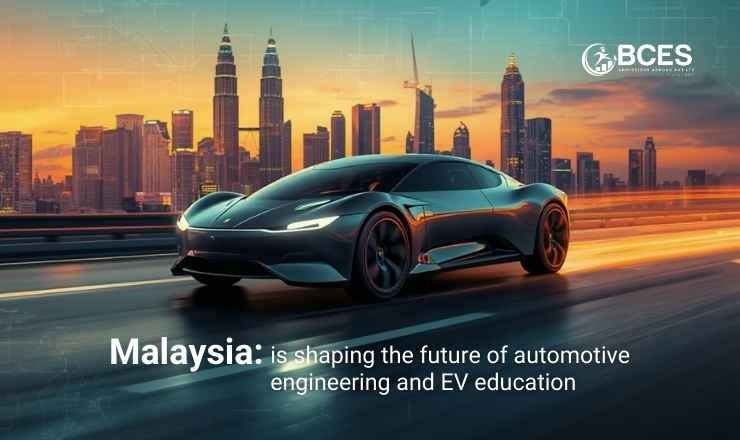
Why are students who dream of working on tomorrow’s vehicles suddenly looking towards Malaysia? In a world where the automotive industry is moving at a fast pace towards sustainability and smart technologies, Malaysia has positioned itself rather quietly as a strong academic hub for students interested in the next generation of mobility. The country is fast becoming a serious destination for engineering studies with a clear focus on electric innovation due to growing investments and industry-aligned universities.
In the last couple of years, Malaysia has aligned its education system to changes in mobility and sustainability that are taking place in the world. Universities no longer teach just conventional concepts in automotive studies. Rather, they are training students for a world shaped by electric vehicle technology, connected systems, and clean transportation. Updates at the national level that support green mobility, local EV manufacturing, and innovation through research further make Malaysia a favorite among ambitious students from other countries.
One of the strongest positive factors about studying in Malaysia is how much education is aligned with the industrial needs of today. Automotive courses will be firmly grounded in practical reality, merging theory with laboratory learning and industrial partnership. Students will be exposed to automotive engineering in Malaysia through modern workshops, simulation equipment, and applied research facilities that reflect exactly what is going on in the global marketplaces today.
With a growing automotive ecosystem in Malaysia, supported by both strong local brands and international manufacturers, universities have been encouraged to apply more practical skills in areas such as vehicle diagnostics, battery performance, and intelligent systems. As a result, students develop expertise that is directly related to studies in EV technology and smart mobility solutions. It is this balance of mechanical foundations to emerging technologies that helps the graduate remain relevant within a rapidly changing industry.
Another reason Malaysia is gaining attention is its emphasis on sustainability. It actively imparts concepts on green mobility education, energy efficiency, and environmentally responsible transport systems through its universities. And with climate goals shaping automotive policies around the world, such knowledge is becoming increasingly vital for future engineers to have. Malaysia’s updated curriculum reflects this global reality and prepares students for serious contributions toward cleaner transport solutions.
The learning environment is also highly international and student-friendly. Campuses bring together learners from multiple countries, encouraging collaboration and global thinking. Many faculty members have industry or research experience that enables students to understand not just how systems work but why innovation matters. This approach supports long-term future mobility careers, whether students plan to work in product development, testing, analytics, or research.
Besides innovation, Malaysia’s push has also resulted in the formation of technology hubs and research centers connected to universities. At these, students work on projects that involve electric vehicle innovation, digital vehicle modeling, and intelligent transportation systems. In addition, the Malaysian government is establishing national projects intended to create and share information on future ready mobility and continuing to provide up to date education for Future Mobility Development.
Upon graduation from Malaysian colleges and universities, students have indicated that their education prepares them for success in the Automotive and Mobility sector. Employers have reported a demand for new hires who possess skill sets related to Sustainable Transportation Engineering, Hybrid Technologies and Smart Vehicle systems. Students studying in Malaysia benefit from exposure to innovative research and technology at the earliest possible age and in an academic environment that encourages risk-taking and creative thinking to problem solve.
Students wishing to pursue an education abroad find that the Team at BCES Admission Abroad assists them at every step along the way with clarity and confidence. Expert counseling guides them to choose options that suit their career vision, from shortlisting the right programs to helping with the application journey.
Contact BCES Admissions Abroad today for personalized guidance and admissions support.