


8 January 2026
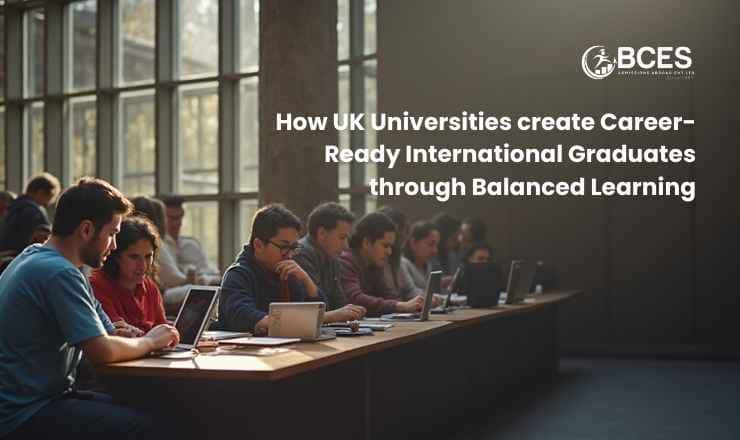
Many International Students select the UK not just to earn a degree, but instead, to receive a well-rounded educational encounter that is Practical, Relational and Career Ready! This is due to how UK Universities provide a good combination of both Academic Theory and Practical Learning allowing students to not just learn the theory behind various concepts but also helping them to Learn With Confidence how to apply that same theory into real-world experiences.
The UK education system is designed beyond just memorization. Universities focus on helping to understand why something matters and how it actually works in a real life. For international students studying in the UK, such a balance creates a smoother transition into global workplaces and professional environments.
Central to UK education is the strong academic grounding it lays. Students are introduced to the key theories, models, and frameworks through both lecture-based and seminar-based learning, with both formats encouraging discussion and critical thinking. The interactive nature of these sessions enables students to question the concepts being taught and view them from various perspectives, which not only aids in their understanding of the concepts, but also builds their confidence when communicating – an important advantage of UK higher education for international students.
One of the distinct features of UK universities is the speed at which theory is applied to practice. This is achieved through the use of real-world examples in day-to-day teaching via case studies, simulations, research-based assessments and teamwork. Students are not required to study real-life situations in a vacuum; they are instead required to look at real industry problems that some industries are presently confronting. As a result, practical application is not an afterthought but rather a fundamental component of a student’s academic experience in UK universities.
The most current academic updates indicate that universities in the UK are working to ensure that educational programme contents are reflective of the demands of today’s global environment. Higher education institutions are now providing even greater attention to providing students with skills in the areas of employability, applied research and industry-related knowledge. As such, programmes are regularly being assessed to provide students with an education that is responsive to today’s changing working environments, thereby enhancing the ability to gain work-ready students in the UK.
Teaching within UK universities is often informed by industry experience. Many lecturers have worked professionally in their fields and bring practical insight into the classroom. Guest sessions by industry experts, live projects, and applied research discussions carry students through how academic learning links to real decision-making. Such exposure significantly prepares students looking to gain global skills development UK, thereby readying them for international work cultures.
Assessment methods evaluate the students’ final assessments, but also evaluate the students’ presentations, projects, group assignments, reflective journals, and research. These assessments allow students to develop teamwork, problem-solving, and communication skills and assist international students in finding their strengths beyond written exams and experiencing a more confident educational experience of theoretical and practical studies at UK universities.
Another important feature of studying in the UK is that students are encouraged to conduct independent research, to take responsibility for their learning, and to establish their own opinions of the world. The experience of independence also serves to increase students’ personal responsibility, adaptability, and self-confidence.
Students are provided with a richer learning experience with support services such as writing support, workshops, etc. in addition to independent research and the ability to participate in cooperative learning experiences with other students. Students are encouraged to collaborate with students/scholars from various cultural backgrounds, thus benefiting from each other’s experiences. Such a collaborative learning environment aids in the preparation of personal development and professional opportunities for international students who come to the UK for higher education.
This balanced model of education matters for students who plan their future. It ensures that graduates leave with not just theoretical knowledge but practical understanding, critical thinking skills, and the confidence to perform in real-world roles.
At BCES Admissions Abroad, we guide students toward UK universities that provide this perfect balance of learning. From selecting the right course to understanding academic expectations, our professional staff guides at every stage in pursuing studies abroad. Contact us today at +91 9319996330 to take the first step toward a future molded by practical learning and academic excellence in the UK.