


5 February 2026
Why do Indian students prefer Singapore as a location for quality education, realistic expectations, and global recognition? There is a straightforward answer: they provide education, innovation, and students in such a way that makes them work together as one. In addition, Indian students are able to find an organized, practical, and future-ready environment from day one due to the structure of their education systems.
The Government of Singapore has made education a priority for the country. Therefore, Singaporean universities are subject to rigorous academic standards so that all universities operate with the same high standard of teaching. This is reassuring for Indian students who will be entering classes with an international component. Each subject has a clear set of outcomes, and Indian students will have an understanding of what they are able to do by the end of each subject.
Another major contributor to Singapore’s outstanding reputation as a university is the curriculum being consistent with worldwide educational standards. These curricula are periodically reviewed to ensure relevance. Current revisions are focused on digital literacy, sustainability, innovation, and internationalised business practices, which allows students from India to not only develop skills in theory and concepts but also acquire current, relevant information that aligns with those of the world’s Indian job markets.
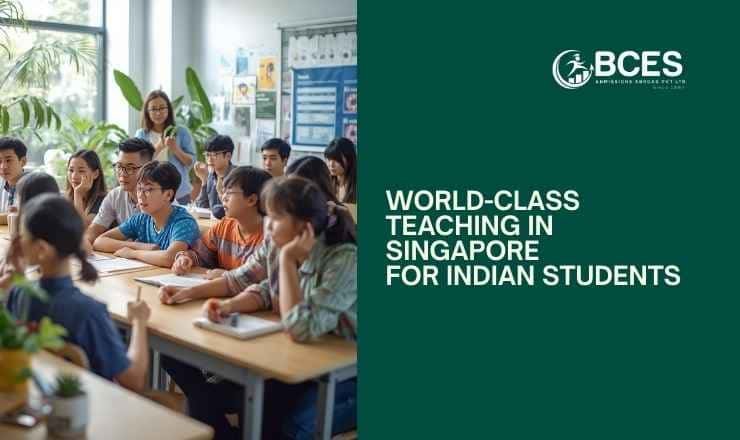
Teaching standards remain high due to highly qualified teachers. Singaporean lecturers possess both academic and practical knowledge of the subject matter. This makes learning more interactive and hands-on. Indian students benefit from classroom discussions, case studies, and learning activities that promote thinking rather than mere memorization. The focus is on understanding and applying what is learned.
Singapore has a robust system of continuous assessment. Students are assessed through assignments, projects, presentations, and class participation. This takes some pressure off final exams and allows students to develop and grow. New developments in Singapore emphasize skill-based assessment, and students demonstrate their skills and preparedness for the workforce.
Ongoing evaluation of academic institutions is essential for maintaining high academic standards. Universities must follow set guidelines and are regularly examined through evaluations to make sure they are following the country’s education standards. Evaluations are done on instructional curriculum, method of teaching, referencing and student performance. For Indian students, this meets and aligns with the standards that the country of Singapore has established.
Technology also allows for improved delivery of education. Universities in Singapore are very up to date with using technology as part of their methods of education with electronic education platforms and/or interactive education environments. For example, students can return to lectures that have been audio recorded; use web-based course materials; and/or use a digital library. Hybrid education is becoming increasingly popular because it offers students more options yet does not compromise on quality. Therefore, hybrid education options help international students adjust to an unfamiliar educational culture.
In addition to classroom support from the lecturer or instructor, universities in Singapore offer many support services outside of the classroom to help students succeed. Support services provided by universities include easy access to lecturers; available academic guidance; and support for responding to a student’s dissatisfaction with his/her experience in the Higher Education Institution to which the student is registered. Because of this supportive environment, Indian students feel as though they are regarded as part of the university community and are provided with support; as a result, they can achieve better academic success. Additionally, university supports provide Indian students with the foundation of industry-ready professionals by increasing their level of confidence and providing them with skills to perform successfully in today’s competitive global economy.
A multicultural classroom setting brings a rich dimension to the learning experience. Students from diverse countries work together, share ideas, and acquire global perspectives. Indian students develop their communication skills and cultural understanding, which are imperative for international careers. Universities deliberately plan activities for collaborative learning so that all students can benefit from this diversity.
Selecting the right institution is important, and this is where BCES Admissions Abroad plays an important role. BCES Admissions Abroad guides Indian students to Singaporean universities that have a reputation for high teaching quality, structured learning, and academic integrity. Right from shortlisting courses to understanding academic requirements, students are provided with accurate and honest information. For personalized assistance and expert counseling on studying in Singapore, contact us today at +91 93199963330.