


7 February 2026
Ever wondered what it feels like sitting in a Malaysian classroom as an Indian? Will the teaching style feel somewhat familiar, or will it be something new? The feeling does make a difference, since your confidence, performance, and experience as a student can depend on how comfortable you are in class. The classroom culture is just as important as finding the ideal university or course for Indian students studying in Malaysia today.
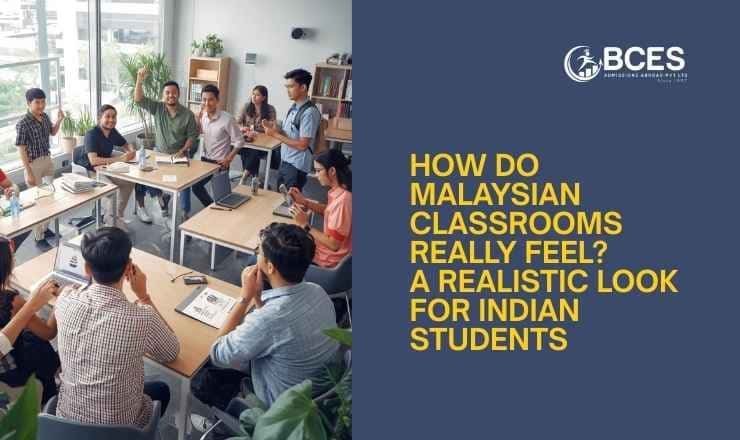
Malaysia has emerged in recent years as one of the top choices for Indian students, due to its globally accredited education system and friendly academic environment. Inside the classroom you will find a mix of structured learning and open learning: The lecturer will provide you with a clearly defined syllabus, but expect that you will also have your own thoughts, you will be able to ask questions, and you will participate in classroom discussion. The balance between structured and open learning provides an environment that supports student-centred learning in Malaysia that has been enhanced due to the recent academic reforms.
The pedagogy also suits Indian expectations: concepts are clearly explained and in an applied manner. Without pressuring students to memorize, the faculties bring on board practical examples, case studies, presentations, and healthy discussions. The medium of teaching is English; however, the faculties are very understanding if the international students take some time to get used to this. The effect is an atmosphere that is more friendlier than daunting.
A prominent characteristic of Malaysian classrooms is diversity. Students from a lot of countries come to study together, meaning there are truly multicultural settings in the class. Indian students frequently receive it and work in mixed-nation groupings, which helps sharpen communication, cultural awareness, and teamwork. With time, this exposure will build confidence and get them ready to venture into the global workplace.
Another important component is the development towards practical learning. Many Universities are accordingly mapping courses to industry requirements in the form of research-based assignments, presentations, and applied tasks. This trend ensures that you would be able to acquire skills with your core academic learning. Indian students, who are participative, fit in well and show better performance with quicker adjustment.
There is respect, yet friendliness in the student–teacher relationship. Faculty welcome questions during lectures and maintain approachable hours outside class. This openness helps Indian students be comfortable in seeking academic guidance. Rather than a rigid hierarchy, students are viewed as active contributors to the learning process.
In Malaysia, assessment seeks to reduce tension and make exams relevant to their purpose. Exams are still valid, but the students are consistently evaluated through assignments, presentations, class participation, and group projects. This works better for those that are steady learners and not exam smear campaign successes.
Modern academic developments have brought the idea of blended learning to the limelight. Modern universities share course materials, allow online submission of work, and even provide videos of lectures. With this trend, international students find it easy to transition to the new country without hiccags.
The entire concept of what happens inside the classroom itself prepares students both mentally and academically, which is exactly what we believe. We don’t just provide admission assistance; we understand that students need to comprehend the teaching styles and academic culture to feel comfortable once they get there.
If you are looking for expert advice and personalized assistance for your studies in Malaysia, stay assured and reach out to us at +91 9319996330 for your next step.